
Quick-service & fast casual
Crew training that keeps up with a lunch rush
What makes readiness hard in quick service
The day is a series of cliffs
Volume does not ramp, it arrives. A crew that is fine at 10:40 is underwater at 11:50, and the difference is often one person on one station. Planning at the shift level is too coarse to catch that; you need to know who is on the window at 12:15 specifically.
Turnover is structural
Any system that assumes a stable roster is wrong here. A meaningful share of the people you are staffing next quarter have not been hired yet, which means the training record has to be cheap to maintain per person and has to survive people leaving and coming back.
There is no quiet time to train in
Or rather, there is exactly one, and finding it requires knowing which stations are running below their target in which block. That is a planning question, not a training question, which is why the two live in the same product here.
What it looks like on a QSR floor
- Station readiness across register, drive-thru order, window, fry, grill, assembly, expo and prep.
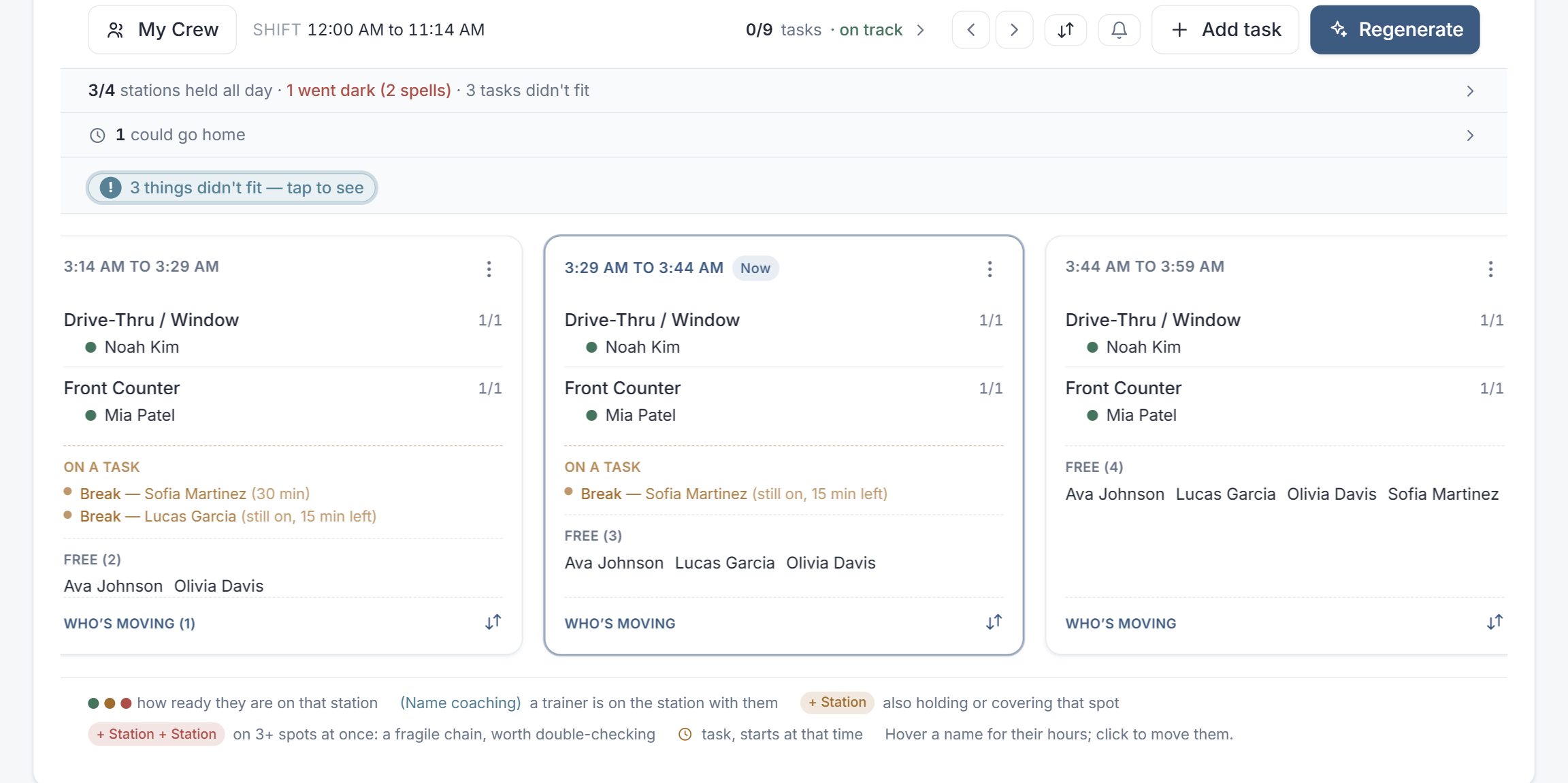
- A whole-day plan in blocks, so the 12:15 problem is visible at 9am instead of at 12:14.
- Per-station required floor versus target staffing, so running one under target is a decision rather than a surprise.
- Two-minute tablet evaluations run between waves, not a sit-down at close.
- Training paired into the one block of the day that can absorb it, one coach to one trainee.
- Priorities ranked across the crew clocked in right now, so a spare ten minutes goes to whoever needs it most.
Common questions
What stations should a QSR track training on?
Most quick-service formats land on six to ten: front register, drive-thru order, drive-thru window, fry, grill or primary cook, assembly or sandwich board, expo or bagging, prep, and open/close. The two that cause the most trouble when undertrained are drive-thru window and assembly, because both fail visibly and immediately under volume.
How do you train crew when every shift is busy?
Find the block that is genuinely below target rather than the shift that has the most people on it. Mid-afternoon between the lunch and dinner pushes is the classic window in QSR, and it is often the only one. CrewSharp's planner surfaces those blocks because it knows each station's target staffing through the day, which is a different question from who is scheduled.
Can it handle high turnover?
That is the assumption it is built on. Team members are unlimited and priced per store rather than per person, re-importing a roster reattaches returning people to their existing history instead of creating duplicates, and members you never want imported can be flagged to be ignored.
Does it work for a franchise with company standards?
Yes. Station checklists are yours to define, so a franchisee can hold the brand's standards as the actual scored items, and multi-unit groups can run the same set across every store. See the multi-unit page for how that works across locations.
Plan one real lunch rush with it
Import a week of schedule, generate the day, and look at where it disagrees with the plan in your head. That gap is usually the whole pitch.
30 days free. No card to start. Cancel in one click.